A working budget guide — with real price ranges by sign type, the cost drivers most people don't think about, and the hidden line items first-time buyers never see coming.
If you've never bought a commercial sign before, the pricing can feel like a black box. The most common question we get from new customers — by a wide margin — isn't about lead time or design options. It's the same five words: "What should I expect to spend?" Here's the honest answer.
Signs aren't sold off a shelf. Every project is fabricated to your building, your brand, your local code requirements, and your site conditions. Two channel letter signs that look almost identical from the road can be $4,000 apart in actual cost — because one is mounted on a flat stucco wall and the other had to be engineered to a metal façade with structural backers. The work behind the sign isn't visible, and that's where most of the cost lives.
The good news: while every quote is custom, there are predictable ranges. After 37+ years of building signs in Northeast Florida, we can tell you with confidence what most projects cost — and just as importantly, what makes a quote land at the top of the range vs. the bottom.
These are typical installed prices for commercial work in the Jacksonville / Northeast Florida market, in 2026 dollars. They assume in-house design, fabrication, and permitted installation — not the cheapest version of each product, but not the highest end either. Your actual quote will land somewhere in these bands based on size, materials, illumination, and site conditions.
| Sign type | Typical range | What changes the price |
|---|---|---|
| Channel letters (storefront) | $3,000 – $8,000 | Letter height, illumination style (front-lit vs. halo-lit), backer panel vs. flush mount, raceway requirements |
| Large channel letter sets | $8,000 – $25,000+ | Multi-line storefronts, anchor tenant signs, oversized letters (4 ft and up) |
| Monument signs (small / simple) | $5,000 – $15,000 | Stucco or aluminum cabinet, illuminated face, single-tenant identification |
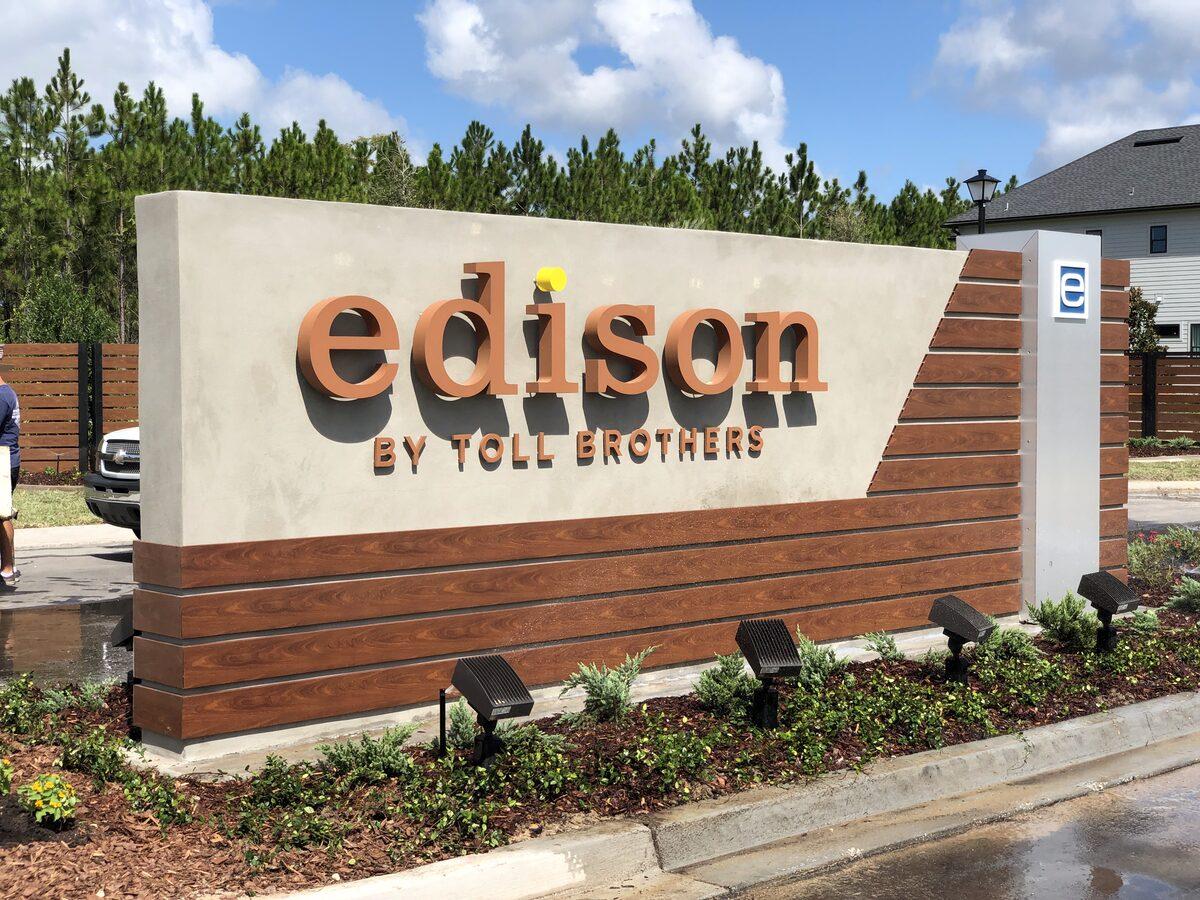
| Monument signs (premium) | $15,000 – $50,000+ | Brick or stone base, dimensional letters, full architectural integration, foundation work |
| Pole / pylon signs | $10,000 – $80,000+ | Height, illumination, multi-tenant panel systems, structural engineering, foundation depth |
| LED electronic message centers | $20,000 – $80,000+ | Pixel pitch (resolution), display size, control system, integration with existing structure |
| Vehicle wraps (cars, SUVs) | $3,500 – $7,000 | Partial vs. full wrap, color complexity, vehicle make/model, design from scratch vs. existing artwork |
| Vehicle wraps (vans, box trucks) | $5,000 – $12,000+ | Vehicle size, rivets and contours, full vs. partial, fleet pricing breaks at volume |
| Lobby / interior signs | $1,500 – $10,000+ | Material (acrylic, brushed metal, halo-lit), size, mounting complexity, ADA-compliant systems |
| Banners & vinyl graphics | $100 – $2,500 | Size, finishing (grommets, hems, pole pockets), substrate, install or pickup |
You can find sign companies that come in well below the bottom of these ranges. We've replaced a lot of those signs at three-year intervals, after the substrate failed, the LEDs burned out, or the install came loose in a hurricane. The cheapest version of a sign is rarely the lowest total cost of ownership. We talk to every customer about that math before we quote.
Two channel letter signs in the same range — say, $4,000 vs. $7,500 — usually differ on three things:
Illumination. Non-illuminated letters are the cheapest. Front-lit (face-illuminated) is mid-range. Halo-lit (reverse-channel, with light glowing behind the letter onto the wall) is the most premium look and runs 30–50% more than front-lit at the same size. Open-face neon is its own category — still possible, but specialty work.
Mounting and wall conditions. A flat stucco or block wall is the easy install. A standing-seam metal panel system, an EIFS wall that needs reinforcement, or a brick façade where every anchor has to land in mortar — those add labor, sometimes engineering, and almost always more materials behind the sign than in front of it.
Permits and local code. Different Jacksonville-area municipalities have different sign codes, and historic districts add another layer. A sign in Riverside or San Marco has different requirements than one in St. Johns County. The permit itself isn't expensive — but designing to the code, drawing the engineered structural and electrical plans, and shepherding the permit through review takes time. That's built into your quote.
Most surprises in sign budgets come from line items that aren't on the sign itself. Here's the list of things first-time buyers consistently don't anticipate:
Permits. Usually $150–$500 paid to the city or county, depending on the project. Standalone signs (monuments, pylons) often require structural engineering stamps — another $500–$2,000. Variances or appeals can add more.
Electrical hookup. Any illuminated sign needs power. If a circuit isn't already at the location — and for most new monument signs, it isn't — you're looking at a licensed electrician trenching from the building to the sign location. Budget $1,500–$5,000 for typical new electrical runs, more for long runs or hardscape that needs cutting.
Structural engineering. Florida wind-load requirements are strict. Anything tall, freestanding, or oversized needs an engineer's stamp on the foundation and structural design. We build this into quotes for projects that need it, but it's not always obvious from the outside that a 12-foot monument needs a 4-foot-deep concrete footing with rebar.
Surveys. Some projects — especially anything near a property line, in a right-of-way, or replacing a non-conforming sign — require a surveyor to certify location. $500–$1,500.
Landlord and HOA approvals. If you lease your space, the lease almost certainly requires landlord sign-off on exterior signage. Subdivisions, business parks, and shopping centers have their own design standards. Approval cycles can add 2–6 weeks to your timeline. The cost is in the calendar, not the invoice.
Future maintenance. Illuminated signs need cleaning, occasional LED replacements, and re-lamping every 8–12 years (modern LEDs last much longer than the fluorescent and neon they replaced, but they don't last forever). Wraps need washing — high-quality cast vinyl runs 5–7 years before color shift becomes noticeable. Budget 3–5% of the sign's installed cost per year for long-term maintenance.
Removal and disposal. If you're replacing an existing sign, the old one has to come down. Pulling channel letters and patching the wall is included in most replacement quotes; demoing a 20-foot pylon and grinding out a concrete foundation is a separate project that can run $2,000–$8,000.
For any given project, there are typically three tiers worth thinking about:
Entry-level. Functional, code-compliant, gets your name on the building. Often non-illuminated or basic front-lit. Standard materials, no architectural integration. The sign you'd put up if you were renting month-to-month or planned to rebrand in two years. Bottom 25–35% of the ranges above.
Mid-range. The right answer for most established businesses. Halo-lit or premium front-lit channel letters; monument signs with masonry or stone integration; LED EMCs sized appropriately to the road. Designed to last 10+ years without intervention beyond cleaning. Middle 40% of the ranges.
Premium. Architectural-grade signage. Multi-piece monument systems with site lighting and landscaping. Custom-fabricated dimensional features in copper, brass, or anodized aluminum. LED displays at the high end of pixel resolution. The sign becomes part of the building's permanent identity. Top 20% of the ranges.
There's no wrong tier — there's only the wrong fit. A premium $40,000 monument in front of a strip-mall storefront looks out of place. An entry-level $5,000 vinyl banner in front of a $2M medical office sends exactly the wrong signal to the patient walking in for the first time.
Spend more on: Foundation and structural engineering. LED quality and warranty. Illumination — under-illuminated signs are simply not legible at night. Mounting hardware and weatherproofing. These are the things that determine whether your sign is still doing its job in year 10.
Save on: Trim color variations and minor design flourishes that don't affect legibility. Specialty finishes that aren't visible from the road. Lit borders or accent lighting when the primary illumination is already doing the work. Custom raceways when a standard cabinet would meet code.
The pattern: spend on the things that affect function and longevity; be conservative on the things that affect decorative finish.
A new dental practice in Mandarin asks us to budget signage for a freestanding building. The package: monument sign at the curb, channel letters on the building face, lobby logo for the reception desk, ADA wayfinding inside, vehicle decals for one fleet van.
Honest budget conversation: monument at $18,000 (illuminated, stucco base matching building); channel letters at $7,500 (halo-lit, 18" letterforms); lobby sign at $3,200 (brushed aluminum dimensional logo, halo-lit); ADA package at $1,800 (8 rooms plus restrooms); vehicle decals at $850. Total signage program: $31,350.
That's a real project from earlier this year. Most multi-piece commercial signage programs for new builds land between $20,000 and $80,000 depending on scale.
Treating the sign as a one-time expense. A good sign earns its budget back in walk-in traffic and brand recognition for a decade or more. Pricing it like a marketing line item (CPM, impressions) usually justifies a much bigger sign than the buyer initially considered.
Cheaping out on illumination. A storefront sign you can't read at night is doing roughly half the work it should be. In Jacksonville's market, where most retail and service traffic happens between 7am and 9pm year-round, an unlit or under-lit sign loses six effective hours a day.
Skipping permits. Unpermitted signs eventually get noticed by code enforcement and have to come down. The replacement cost — plus the original cost — almost always exceeds doing it right the first time.
Forgetting about the landlord. Tenant build-out sign approvals can take longer than the fabrication itself. Start the approval conversation the same week you start the design conversation.
Every sign project has its own constraints — site conditions, brand requirements, code, budget, timeline. The fastest way to a real number is a 20-minute conversation. Tell us what you're trying to do and we'll come back with a quote that reflects your actual project, not a generic range.
Get a Free Quote